The Path Within
Meditation Teachings
The Dhammakaya meditation technique — a journey to the center of the body and the heart of the Dhamma
The Dhammakaya meditation technique — a journey to the center of the body and the heart of the Dhamma
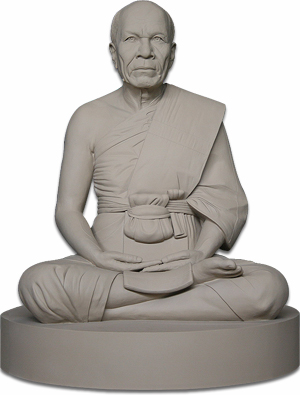
Dhammakaya meditation, also known as Vijja Dhammakaya, is a meditation technique that Luang Pu Sodh Candasaro rediscovered through his own profound practice. He believed this was the original meditation method practiced by the Lord Buddha himself — a direct path to experiencing the Dhamma Body (Dhammakaya) that exists within every being.
The word "Dhammakaya" combines "Dhamma" (the truth, the teaching) with "Kaya" (body). It refers to the body of enlightenment — a luminous, crystal-clear form that Luang Pu Sodh taught could be directly experienced through proper meditation practice at the center of the body.
Unlike many meditation traditions that focus primarily on concentration or mindfulness of external objects, Dhammakaya meditation directs the attention inward to the center of the body, approximately two finger-widths above the navel. This is considered the "home base" of the mind — the point where true inner peace and wisdom can be accessed.
The Dhammakaya meditation follows a systematic approach, guiding the practitioner from outer awareness to inner stillness.
Sit comfortably in a cross-legged position or in a chair. Keep the back straight but not rigid. Place the right hand over the left, palms upward, with the tips of the index fingers gently touching. Close the eyes softly and relax every part of the body from the crown of the head to the soles of the feet.
Gently bring the mind's attention to the center of the body, approximately two finger-widths above the navel. Do not force or strain. Simply rest the awareness at this center point with a feeling of comfort and ease, as if the mind is coming home.
Gently imagine a clear, luminous crystal sphere at the center of the body. It should be bright, pure, and perfectly still — like a diamond reflecting pure light. If the image does not arise easily, do not worry. Simply maintain gentle awareness at the center.
Softly repeat the mantra "Samma Arahang" in your mind, coordinating with the gentle awareness at the center of the body. The mantra helps to further still and refine the mind, like polishing a mirror until it reflects perfectly.
As the mind becomes more still and concentrated, the crystal sphere may grow brighter and more defined. Allow the mind to settle deeper, moving through progressively subtler states of consciousness. This is the pathway to the Dhammakaya — the body of enlightenment within.
At the deepest level of practice, the distinction between observer and observed dissolves. The practitioner rests in a state of pure, luminous awareness — a direct experience of the Dhammakaya. This state is described as one of boundless peace, compassion, and wisdom.
Close your eyes gently. Bring your awareness to the center of your body. Follow the breath as it naturally flows in and out.
Experience a profound sense of calm and tranquility that transcends the constant fluctuations of the external world. The stillness accessed through meditation becomes a refuge available at any time.
As the mind becomes more refined through practice, clarity of thought and perception naturally increases. Decision-making improves, and the fog of habitual reactivity lifts.
Deep meditation naturally cultivates a sense of connection with all beings, giving rise to genuine compassion and loving-kindness that extends outward into all relationships.
Practitioners report experiencing progressively deeper states of understanding about the nature of mind, consciousness, and reality — insights that align with the ancient teachings of the Buddha.
"Stop the mind at the center of the body. When the mind is still, you will see a bright, clear sphere. This is the beginning of the path to the Dhammakaya."
— Phramongkolthepmuni (Sodh Candasaro)