The Sacred Journey
Life & Biography
From humble beginnings to spiritual mastery — the extraordinary life of Luang Pu Sodh Candasaro
From humble beginnings to spiritual mastery — the extraordinary life of Luang Pu Sodh Candasaro
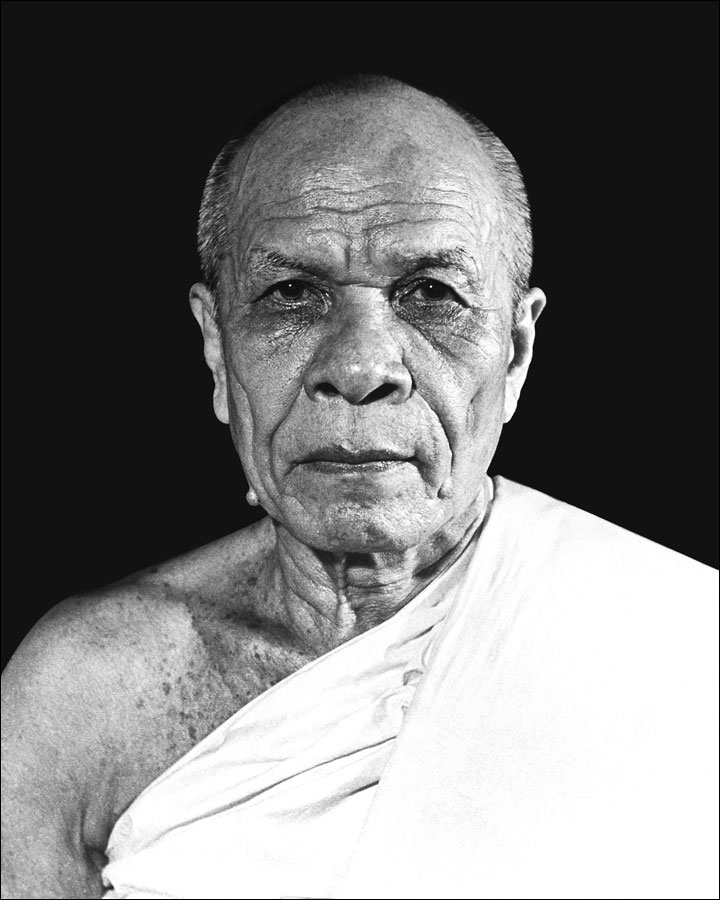
Sodh Mikaewnoi was born on October 10, 1884, in Song Phi Nong District, Suphan Buri Province, Thailand. He was the son of Ngen and Soodjai Mikaewnoi, a family engaged in rice farming and trade.
From a young age, Sodh showed a deep inclination toward spiritual matters. The loss of his father at a young age profoundly affected him, stirring within him a deep contemplation about life, death, and the nature of suffering. He made a solemn vow to dedicate his life to discovering the deepest truths of the Buddha's teachings.
Before his ordination, he worked as a merchant to support his family, demonstrating the sense of duty and determination that would later characterize his monastic life. His early experiences with hardship and responsibility forged in him a resilience that would prove essential on his spiritual path.
In 1906, at the age of 22, Sodh was ordained as a Buddhist monk at Wat Songpinong. He received the Pali name "Candasaro," meaning "of brilliant moonlight." From the moment of his ordination, he dedicated himself wholly to the study of the Pali scriptures and the practice of meditation.
Unsatisfied with conventional interpretations, he traveled to study under numerous meditation masters, seeking a practice that matched the depth of realization described in the ancient texts. His quest took him to temples across Thailand, each encounter adding to his understanding but leaving him yearning for something more profound.
His determination was remarkable. He would sit in meditation for hours upon hours, sometimes through the entire night, driven by an unshakeable conviction that the complete truth of the Buddha's teaching was attainable in this very life.
Sodh Mikaewnoi is born on October 10 in Song Phi Nong District, Suphan Buri Province, to a family of rice farmers and traders.
At age 22, he enters monastic life at Wat Songpinong and receives the Pali name Candasaro. He begins his intensive study of the Tipitaka and meditation practices.
After years of rigorous meditation practice, he attains a breakthrough — the rediscovery of the Dhammakaya meditation technique at Wat Bangkuvieng on the full moon night of the tenth lunar month.
He is appointed Abbot of Wat Paknam Bhasicharoen in Bangkok, beginning a 43-year tenure that would transform the temple into a center of meditation and learning.
During the tumultuous war years, he continues his teaching and meditation practice, providing spiritual refuge and guidance to people during times of great uncertainty.
He receives the royal ecclesiastical title "Phramongkolthepmuni" from His Majesty the King, recognizing his profound contributions to Thai Buddhism.
On February 3, 1959, Luang Pu Sodh passes away peacefully at Wat Paknam Bhasicharoen, leaving behind a legacy that continues to inspire millions.
"Life is short. Time is fleeting. Do not waste a single moment. Practice diligently and seek the truth within."
— Phramongkolthepmuni (Sodh Candasaro)